

Customer loyalty is the holy grail of any business, and it’s no wonder; loyal customers tend to spend more, recommend your product or service, and keep coming back.
However, measuring customer loyalty can be challenging, and it is crucial to get it right.
This essential guide will cover the different ways to measure customer loyalty, the critical metrics, and how to use the data to improve your loyalty program.
However, you’ll need advanced customer loyalty software to conduct this analysis.
Loopy Loyalty, one of the best punch card apps on the market, helps you track key metrics to optimize your loyalty program. It allows you to use data to segment customers and target them with personalized deals, increasing customer loyalty and your ROI simultaneously.
Sounds interesting? Sign up for a free trial.
So, if you’re ready to go beyond basic customer satisfaction, this essential guide will help you get the most out of your customer loyalty efforts.
Let’s begin by discussing why customer loyalty is worth measuring.
Why measure customer loyalty?

Measuring customer loyalty is an essential task for any business. It helps you understand how customers perceive your brand and how likely they will stay loyal.
It gives you valuable insights into improving your products and services and how to market them more effectively. It can also help you identify the most loyal customers who could be potential brand advocates.
By tracking customer loyalty, you can also measure the success of your marketing campaigns and determine which ones are most valuable in driving customer engagement.
Finally, measuring customer loyalty can help you better understand customer satisfaction and identify areas of improvement.
How to do it? The best method is by using the 3 Rs of customer loyalty.
What are the 3 Rs of customer loyalty?
The 3 Rs of customer loyalty include Retention, Retrieval, and Referral.
Retention measures how much of your existing customer base you have retained. It’s essential to evaluate, as it gives you a good indication of how loyal your customers are.
Retrieval measures how often customers come back and make repeat purchases. It shows how satisfied they are with your products and services.
Lastly, Referral shows how often your customers recommend your business to others. It can be a great way to generate new business and increase your customer base.
Still, some people think customer loyalty is equal to customer satisfaction. It’s essential to see the difference between these two terms.
Measuring customer loyalty: How does it differ from customer satisfaction?
Customer loyalty and customer satisfaction are two different concepts that often need clarification.
Customer satisfaction shows how well you meet customers’ expectations. Customer loyalty measures the willingness of customers to continue doing business with your company.
Thus, customer loyalty is about the relationship between the company and its customers, while customer satisfaction measures how well the company delivers its service or product.
How measuring customer loyalty impacts customer retention
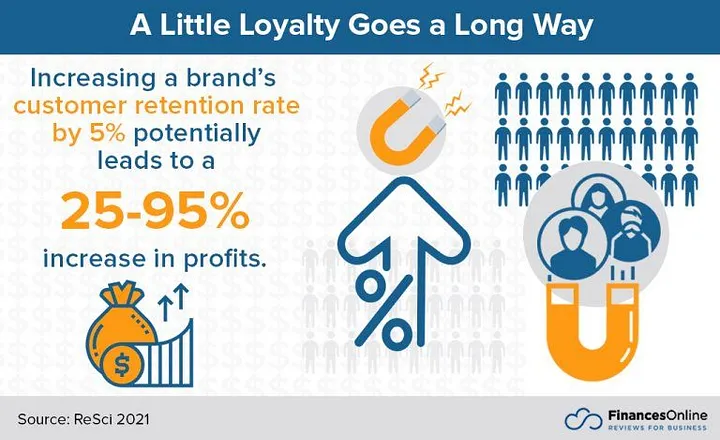
Measuring customer loyalty helps predict retention rates. It allows you to allocate marketing resources more efficiently and focus on keeping loyal customers engaged.
You can also identify which customers are more likely to leave and develop strategies to retain them. It can include offering discounts, loyalty rewards, or better customer service.
How measuring customer loyalty impacts customer lifetime value

Customer lifetime value (CLV) predicts the total amount of money a customer will spend on your products or services over their lifetime. You can calculate it by multiplying the average purchase value by the number of purchases per year by the average retention time in years.
Measuring customer loyalty can impact customer lifetime value in several ways.
- It helps you better predict customers’ future behavior. For example, a highly loyal customer is more likely to continue making purchases over time, which can increase the CLV of that customer. On the other hand, a customer who is not very loyal may be more likely to switch to a competitor, which would decrease the CLV of that customer.
- It helps you identify and target your most valuable customers. These customers are the most loyal, with the highest CLV. By targeting these customers, you can focus your resources on maintaining and increasing their loyalty, ultimately increasing the overall CLV of the customer base.
- You can identify any issues decreasing customer loyalty. For example, you noticed that many customers become less loyal over time. It may indicate that problems with the product or service are causing dissatisfaction. By addressing these issues, you can improve customer loyalty and increase the CLV of your customers.
To optimize your loyalty program and track and measure customer loyalty, you can use customer loyalty software like Loopy Loyalty. It automatically conducts all necessary analyses and helps you boost your results.
Let’s discuss how Loopy Loyalty helps you achieve your loyalty program goals.
What is customer loyalty software?
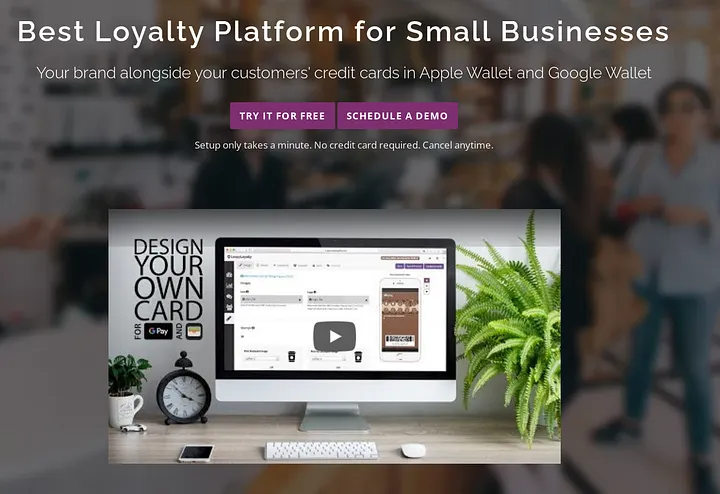
Customer loyalty software helps you launch your loyalty program and track, measure, and manage customer loyalty.
It allows you to analyze customer behavior, understand their preferences, segment customers into specific groups and provide personalized offers to keep them returning to your business.
Loopy Loyalty allows you to create a loyalty program and gives you access to customer data. It helps you understand how they respond to different marketing strategies, allowing you to make more effective campaigns to boost sales.
With Loopy Loyalty, you can also identify loyalty levels and reward customers accordingly. It helps create stronger relationships between your company and customers, resulting in more consistent purchases and higher customer satisfaction.
Let’s dive deeper into customer loyalty software and explain how Loopy Loyalty measures customer loyalty.
How to use customer loyalty software for measuring customer loyalty?

With customer loyalty software such as Loopy Loyalty, you can track customer purchases, interactions, and sentiments to understand your customers better.
By tracking customer data, you can create tailored loyalty programs to reward customers for their loyalty, improve customer experiences, and increase customer retention rates.
Customer loyalty software can also track customer loyalty metrics such as repeat purchase rate, average order value, and customer lifetime value. With this data, you can identify customer segments, determine customer loyalty levels, and identify opportunities for customer engagement.
Want to learn more about critical metrics? Let’s discuss the most important ones for your loyalty program.
Five most important metrics for measuring customer loyalty
To assess customer loyalty accurately, there are specific metrics you need to pay attention to. Here are the top five metrics:
- Purchase frequency shows customer engagement and commitment to your business.
- Repeat customers provide insights into the overall loyalty of your customer base.
- Customer retention rate (CRR) shows how successfully your business retains its customers over time.
- Customer satisfaction shows how well you meet the needs and expectations of your customers.
- Net promoter score (NPS) shows if customers are satisfied with your products or services and are likely to recommend them to others.
These metrics will provide you with invaluable insights into your customer loyalty. Paying attention to your results ensures you’re doing everything possible to keep your customers returning.
10 Essential steps for measuring customer loyalty
There are several critical steps to measuring and improving customer loyalty. Let’s briefly discuss each one.
1. Setting loyalty goals and objectives
When setting loyalty goals and objectives, you should focus on critical factors such as the number of customers you want to retain, the amount of repeat business you want to achieve, and the number of customer referrals you need in a specific period.
You should also set objectives for loyalty program features that are important to your business, such as rewards, discounts, and promotions. These will help to ensure that your customers remain engaged and loyal.
2. Collecting loyalty data
When you create a loyalty program with Loopy Loyalty and start distributing your digital stamp cards, you can determine the customer data you want to collect. Some examples include name, email address, contact number, and birthday.
You can track each customer’s actions and assess details such as how many stamps and rewards they earned and how many rewards they redeemed.

You can identify customers more likely to purchase certain items or services and give them special offers or discounts. You can also evaluate inactive customers who may be at risk of leaving and proactively reach out to see if you can do anything to keep them around.
3. Analyzing loyalty data
By analyzing loyalty data, you can gain insights into the needs and expectations of your customers and develop strategies for meeting these needs to increase loyalty.
Advanced solutions such as Loopy Loyalty allow you to analyze the results your loyalty program has driven automatically. It provides
- Speed
- Accuracy
- Consistency
- Efficiency
- Scalability

By counting the gross and net benefits of your digital punch card program, you can calculate how effective it is, its solid parts, and what you can improve. You will also learn how much revenue the loyalty program has brought you. All without any manual effort.
Start your free trial to see how it works.
4. Identifying trends and patterns
Identifying trends and patterns is an integral part of any business, especially when measuring customer loyalty and understanding buying behavior.
You can uncover unique patterns and trends in customer behavior by analyzing data and researching customer feedback. It can help you decide what products to develop and how to target new customers better.
5. Segmenting your customer base
Customer segmentation helps you improve your overall marketing strategy. By grouping customers based on different criteria, you can measure customer loyalty and identify what motivates them to buy.
For example, you can segment customers by lifetime value, purchase frequency, or location.
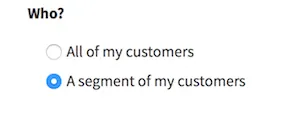
With Loopy Loyalty, you can choose whether you want to send promotional messages to all of your customers or a customer segment.
Then you can pick the segmentation type: stamps earned, rewards earned, or rewards redeemed.
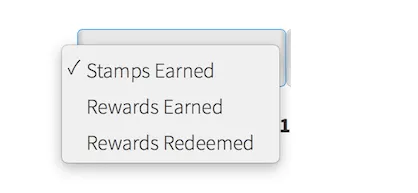
So, for example, you can send a targeted message to customers who earned less than five stamps inviting them to drop by and earn more stamps.

Since you can send the right message to the right people on the right digital channel at the right time, customer segmentation helps you optimize your marketing campaigns and deliver personalized customer experience resulting in increased loyalty.
6. Recognizing and rewarding loyal customers

Recognizing and rewarding loyal customers should be a priority for any business. Not only is it suitable for customer retention rate and overall customer satisfaction, but it can also positively impact your company’s bottom line.
Rewarding loyal customers can be easy, and it doesn’t have to be expensive. A simple thank-you note or special discounts can go a long way.
You can also incentivize repeat customers by offering them rewards points. For example, for each coffee they buy, they get one point; when they collect ten points, they get a reward — a free coffee.
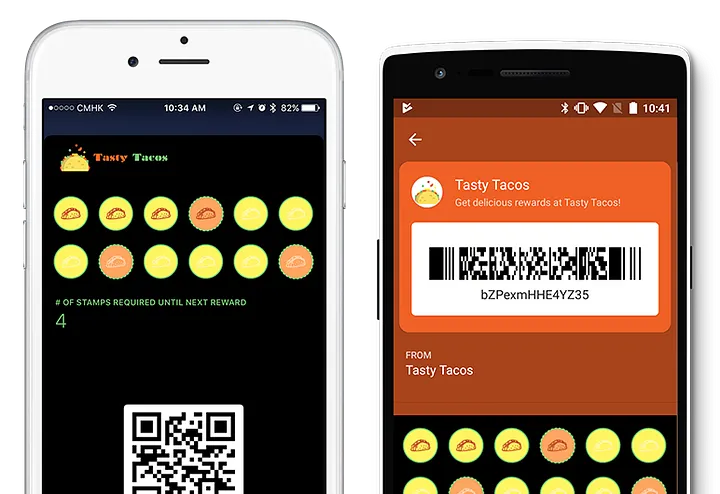
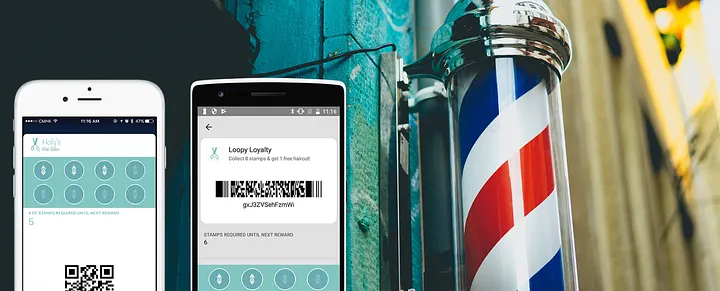
Loopy Loyalty offers a simple solution for creating loyalty punch cards that allow customers to collect stamps and earn rewards. You’ll get access to a platform where you can create and design virtual punch cards in minutes.
Customer can store their loyalty punch card in their mobile wallet to seamlessly collect points whenever they purchase from you. When they collect all the stamps, they get a reward.
This simple system encourages purchases and helps create a positive customer experience since customers like being appreciated. It ultimately leads to increased customer loyalty.
7. Providing personalized customer experiences
Personalized customer experience is essential to stay ahead of competitors. Personalizing interactions and providing tailored customer solutions can increase customer engagement and boost your bottom line.

Loopy Loyalty allows you to reach specific customers with a personalized message. This feature is available in ‘Actions’ under a Customer’s profile. It allows you to tailor your communication to each customer and create a more engaging and memorable experience.

Personalization can increase customer loyalty by improving the customer experience, increasing engagement, and building customer trust.
8. Measuring the effectiveness of your loyalty program

Measuring the effectiveness of your loyalty program is essential for understanding its value and success. You need to be able to answer questions like
- How many customers are engaging with the program?
- How many are returning?
- How much are they spending?
Loopy Loyalty gives you access to searchable transaction history to find your most loyal customers and offer them special deals or rewards. With loyalty program metrics, you can analyze data on the ROI of your loyalty program.
Collecting and analyzing customer loyalty data allows you to make critical decisions about your program to ensure it is as effective as possible.
For example, data can help you identify the best punch card rewards to offer and the optimal frequency for providing them.
It can also help you understand which channels are driving the most engagement, allowing you to focus resources on the most successful ones.
9. Identifying areas for improvement
By analyzing data on customer loyalty, you can identify any issues or challenges causing customers to become less loyal. It could be problems with the product or service itself or issues with the customer experience.
You can gain insights into your customer’s needs and expectations, identify gaps in your products or services, and take steps to address these needs to improve loyalty.
By measuring customer loyalty over time, you can track the effectiveness of your customer retention efforts.
10. Implementing changes and measuring their impact
Implementing changes and measuring their impact is key to success. Whether introducing a new product, changing your marketing strategy, or adjusting your customer service, tracking the results is essential.
Measuring the impact of changes can help you keep tabs on customer loyalty and ensure that your business is always moving in the right direction.
To start, define what you hope to achieve with the change and track the relevant metrics.
Focus on customer-centric metrics that show how customers respond, such as customer satisfaction, retention, or purchase frequency.
It may sound easy, but you should know there are also some traps waiting for you along the way, so it’s worth knowing how to avoid them beforehand.
Three common pitfalls to avoid when measuring customer loyalty
Here are some common pitfalls to avoid when measuring customer loyalty.
- Relying solely on customer surveys. Although surveys are a great way to get customer feedback, they sometimes provide an inaccurate picture of customer loyalty.
- Neglecting your current customers. As much as it’s vital to attract new customers, it’s equally important to keep your existing customers satisfied.
- Focusing too much on short-term customer loyalty. Your customers may be satisfied with your services in the short term, but you also need to focus on long-term customer loyalty. It means considering how likely customers are to return over the long term.
By avoiding these common pitfalls, you can ensure that you are accurately measuring customer loyalty and making the right decisions for your business.
That’s all you need to know about measuring customer loyalty to increase your loyal customer rate. Let’s finish off this article by giving you the key takeaways.
Key takeaways about measuring customer loyalty
To maintain the same customer base, businesses must figure out how to keep new customers from leaving and retain the old ones.
Measuring customer loyalty is an excellent way to do this. Customer loyalty software can help you understand your customers and make better decisions about marketing strategies, retention campaigns, and loyalty rewards.
Loopy Loyalty is an all-in-one customer loyalty platform that helps you create digital punch cards and distribute them to customers to increase their loyalty and satisfaction. You can develop strategies to improve customer loyalty metrics and increase customer engagement in days, not months.
Why wait? Start your free trial now.