
Med spa clients rarely come in once and disappear. They return for skin maintenance, treatment plans, skincare refills, follow-up visits, and seasonal touch-ups. The hard part is making sure they come back to you.
A med spa loyalty program can use stamps, points, paid memberships, VIP tiers, or product-specific rewards. This guide will help you choose the right model and start with the simplest option for most med spas, a digital loyalty card clients can save to their phone.
What Is A Med Spa Loyalty Program?
A med spa loyalty program is a structured way to reward clients for choosing your med spa again after an appointment. It can apply to repeat visits, skincare purchases, referrals, birthdays, quiet-day bookings, or progress through a treatment plan.
The reward can be simple. A client might earn a stamp after a qualifying facial, receive a birthday offer, or get a bonus after a referred friend completes a paid appointment. Some med spas use points based on spend or actions. Others use paid memberships, VIP tiers, or rewards tied to specific products.
A loyalty program does not have to be a subscription. A paid membership is one model, but many med spas start with a digital stamp card because staff can explain it quickly and clients can use it without extra work.
Loyalty Program Vs. Membership Program
The right model depends on the client behavior your med spa wants to encourage first. A med spa that wants more repeat visits should usually start with a digital loyalty card, while a med spa that wants recurring revenue, paid perks, or member status should consider a digital membership program. The best program is the one your staff can explain quickly and your clients can understand before they leave the front desk.
Med Spa Loyalty Model Comparison
| Model | Best For | How It Works | Best Fit |
|---|---|---|---|
| Digital Stamp Card | Repeat visits and simple rewards | Clients earn stamps for qualifying visits, skincare purchases, referrals, or birthday offers | Loopy Loyalty |
| Points-Based Rewards | Spend, referrals, and approved actions | Clients earn points based on purchase value or selected client behavior | Loopy Loyalty for simple rewards, PassKit for formal points programs |
| Paid Membership | Recurring revenue and member perks | Clients pay monthly or yearly for credits, member pricing, priority booking, or VIP status | PassKit |
| Product-Specific Rewards | Treatment or product-line rewards | Clients earn rewards tied to specific products, brands, or treatment categories | Use alongside your own program |
Some med spas also use rewards tied to specific products or treatment categories. These can support client retention, although they should sit alongside your own loyalty program rather than take its place. Product-specific rewards keep clients connected to a product, while your in-house loyalty card keeps them connected to your med spa.
Digital Stamp Cards For Repeat Visits
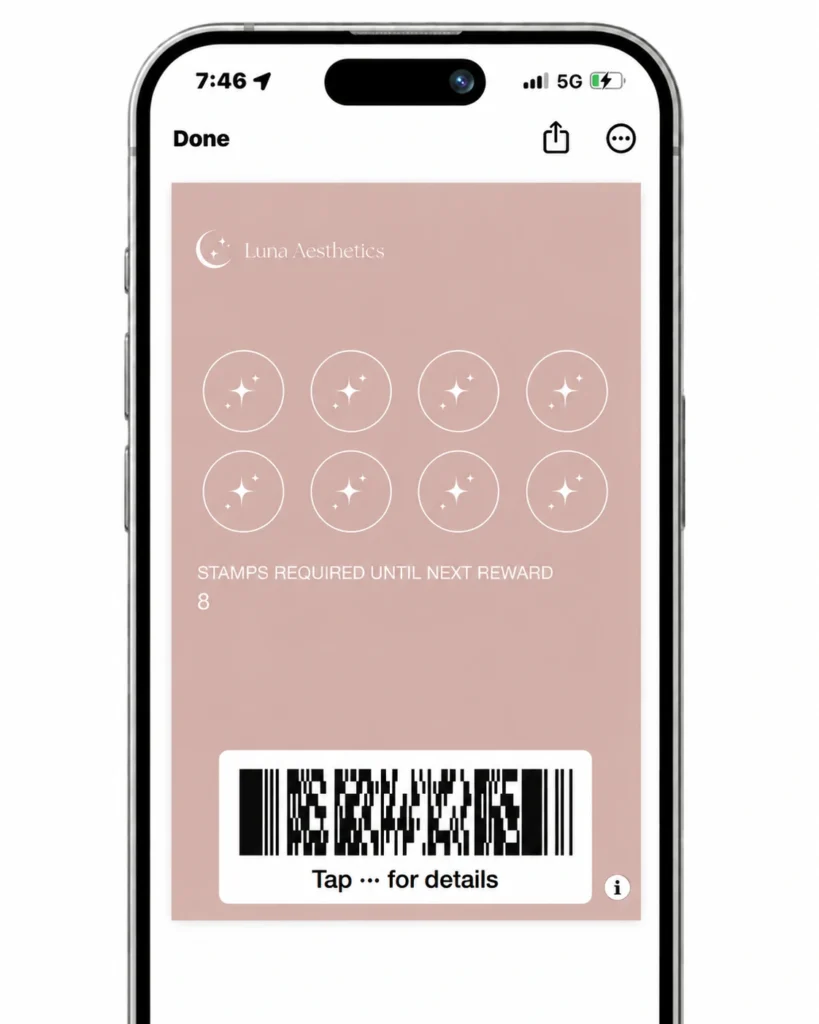
A digital stamp card is usually the cleanest starting point for a med spa loyalty program because it gives clients an obvious reason to return without adding much work for staff. Clients know what they are earning, and the front desk does not have to explain a complicated points formula during checkout.
You could give one stamp for each qualifying facial, one stamp for skincare purchases over a set amount, or a bonus stamp during slower appointment times. After five or ten stamps, the client earns a reward, such as a skincare add-on, retail offer, or bonus treatment add-on where allowed.
This model fits Loopy Loyalty because it keeps the program light. The med spa can reward repeat behavior without building a custom app or asking clients to join a paid plan.
Points-Based Rewards For Spend And Actions
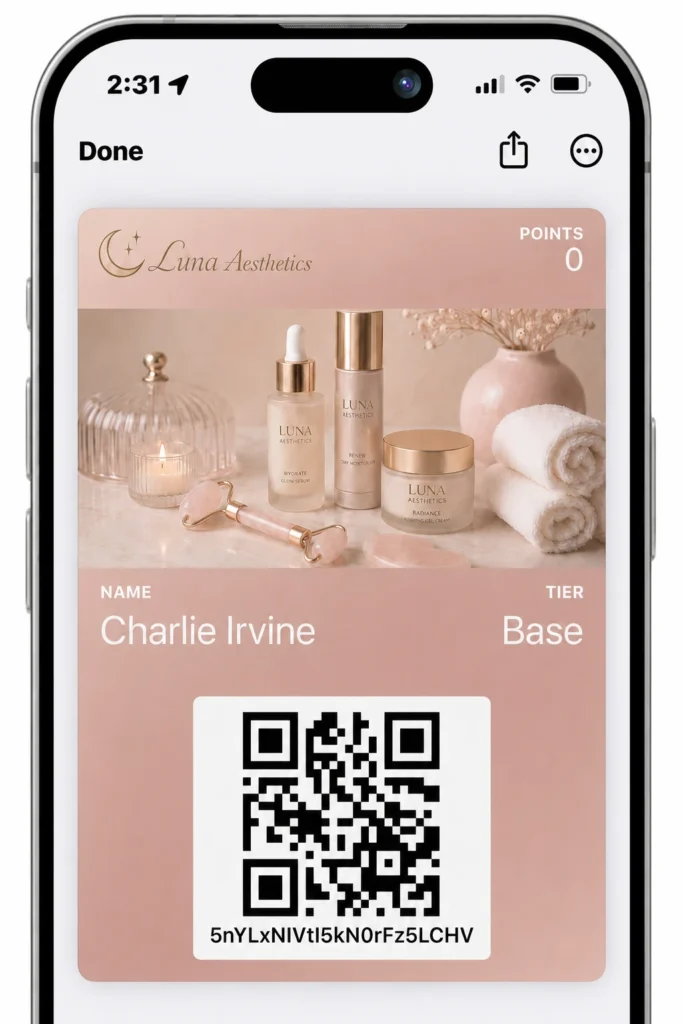
Points give med spas more room to reward different types of client behavior. You can use points for dollars spent, completed referrals, product purchases, repeat bookings, post-visit feedback, or other approved actions that support retention.
The downside is that points become harder to manage when every product, service, and action has its own value. Clients should understand the reward without asking staff to calculate it for them, and staff should not have to remember a long list of exceptions every time someone checks out.
For smaller med spas, a stamp card often does the same job with less admin. For med spas that want a more formal points program with member records, tiers, and wallet-based cards, PassKit is the stronger fit.
Paid Memberships And VIP Tiers
A paid membership works best for clients who want ongoing value and are willing to commit monthly or yearly. It makes sense when your med spa already has repeat services that clients buy on a schedule, such as skincare treatments, maintenance visits, or approved treatment plans.
Membership perks can include treatment credits, member pricing, priority booking, birthday gifts, member-only offers, and tiered status. This model can help create steadier revenue, but it also needs clear terms, billing rules, cancellation rules, and staff training.
PassKit makes more sense when the membership needs a digital card, member ID, paid tier, or VIP pass in Apple Wallet or Google Wallet. Loopy Loyalty is better when the goal is to reward repeat visits without asking clients to join a paid membership.
Med Spa Loyalty Program Ideas Clients Actually Understand
The best rewards are the ones clients can picture using before they leave the front desk. A med spa loyalty program should connect to actions clients already take, like booking a treatment plan, buying products, or sending a friend who is ready to become a real client.
Repeat Treatment Rewards
Repeat treatment rewards work best when they support consistent care. A client who books regular facials, peels, laser sessions, or maintenance treatments already understands the reason to come back. The reward should make that habit easier to keep.
Instead of discounting every visit, tie the reward to a clear milestone. After a client completes a package, finishes a set number of maintenance appointments, or returns within the suggested care window, you can offer a skincare add-on, retail reward, or another approved perk.
Skincare Product Rewards
Skincare purchases are one of the cleanest places to start because clients often need refills between appointments. A reward tied to retail also helps clients stay connected to your med spa after they leave the treatment room.
For example, you could reward clients when they buy a cleanser, serum, SPF, or post-treatment product recommended by your team. This keeps the program tied to aftercare and repeat purchasing rather than random discounts.
Referral Rewards
Referral rewards should focus on real clients, not casual leads. The cleanest rule is to reward the existing client after the referred person completes a paid appointment.
That protects your staff from tracking weak referrals that never turn into revenue. It also makes the reward feel earned, because the client helped bring in someone who actually booked and showed up.
Birthday And Anniversary Rewards
Birthday and anniversary rewards give your team a natural reason to contact clients without sounding pushy. A small gift, bonus stamp, free add-on, or limited-time offer can bring someone back at the right moment.
These rewards work best when they feel personal and easy to redeem. A simple reward used on the next visit is usually stronger than a complicated offer with too many conditions.
Slow-Day Bonus Rewards
Slow-day rewards help move demand into weaker parts of the calendar. If Tuesday mornings or midweek afternoons are quiet, offer a bonus stamp or extra reward credit during those times.
This works because the client gets a clear benefit, and the med spa fills appointment space that would otherwise sit empty.
How Much Does A Med Spa Loyalty Program Cost?
The cost of a med spa loyalty program depends on the model you choose, the software you use, and the reward you give clients. A digital stamp card is usually the lightest setup because it only needs a clear earning rule, a reward, and a way for staff to update the card after qualifying actions.
A points program takes more planning because someone has to define point values, track balances, handle exceptions, and explain the rules when clients have questions. A paid membership usually needs even more structure, including billing, cancellation terms, benefit tracking, and regular communication so members keep using the perks they paid for.
The reward also has a margin cost. A discount on a high-value treatment can reduce profit quickly, while a skincare add-on, product sample, or small retail reward may feel generous to the client and cost the med spa less.
Start with a reward clients actually want and your staff can manage without slowing checkout.
What Med Spas Should Be Careful Rewarding
Med spas should be careful with rewards tied to regulated treatments, referrals, reviews, and prescription-related services. Rules can vary by state, treatment type, provider model, and payment source, so a reward that feels harmless in one business may create risk in another.
Before launching a reward, review any offer connected to injectables, prescription-related treatments, medical procedures, public reviews, or referrals for regulated services. Referral perks need extra care because they can look like payment for sending a patient to the practice, especially when the reward is tied to a paid medical service.
Safer starting points are usually skincare purchases, non-medical add-ons, general visit milestones, birthday perks, and referral rewards that have been checked by a legal or compliance advisor. Reward loyalty without creating pressure around medical care.
How To Start A Digital Med Spa Loyalty Program
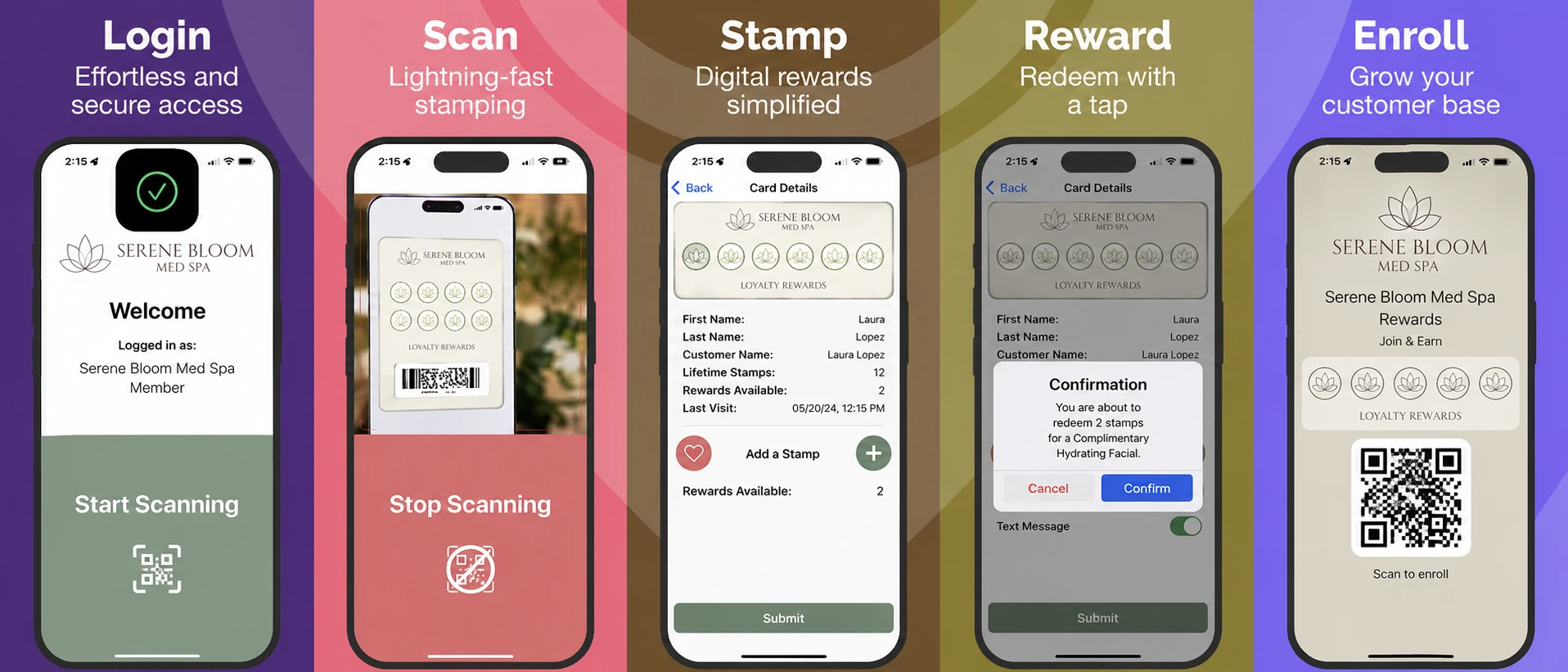
Once your reward model is set, the setup should fit the way clients already move through your med spa. Loopy Loyalty works well here because the card lives on the client’s phone, staff can update it during checkout, and the program does not depend on clients carrying a paper card or downloading another app.
Build One Card For One Clear Program
Start with one digital card and one set of rules. The card should show the client how many stamps they have, what they are working toward, and how close they are to earning the reward.
Keep the card copy short, use your med spa branding, and make the reward visible. A polished card feels like part of the client experience, especially in a business where presentation and trust matter.
Add The Card To Apple Wallet And Google Wallet
Clients should be able to save the loyalty card to Apple Wallet or Google Wallet from a signup link or QR code. This puts the card somewhere they already check, which makes it easier to remember before their next appointment.
The signup process should take a few taps. Asking clients to install a separate app adds work at the exact moment you want them to join.
Put The Signup QR Code In The Right Places
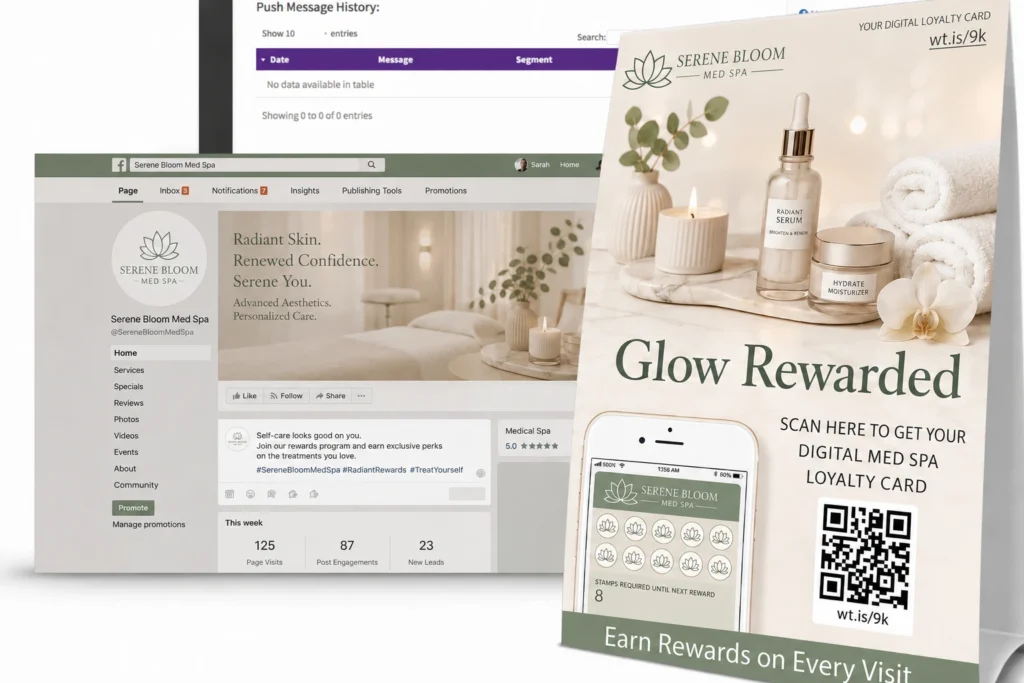
Your signup QR code should appear where clients naturally pause and make decisions. Put it at the front desk, near checkout, in treatment rooms, inside appointment follow-up emails, and on your Instagram profile.
Do not rely on one sign near reception. A client may only notice the program after their treatment, when they are thinking about skincare, follow-up care, or their next visit.
Make Staff Updating Part Of Checkout
The loyalty card needs to be updated every time a client qualifies. Add that step to the checkout routine so staff do not have to remember it as an extra task.
Give your team one line they can use naturally.
“Would you like to save our digital rewards card to your phone and earn stamps on qualifying visits or skincare purchases?”
If staff can explain the program that simply, clients are more likely to join before they leave.
How To Promote And Measure Your Med Spa Loyalty Program
A med spa loyalty program needs attention after launch. Clients have to hear about it at the moments when they are already thinking about rebooking, buying skincare, or returning for follow-up care. Your team also needs to track whether the program is creating repeat behavior, not just collecting signups.
Promote The Program Where Clients Already Make Decisions
The best time to mention the program is during the client’s normal care flow. Use checkout reminders, post-treatment emails, booking confirmation emails, SMS reminders, Instagram stories, and consultation follow-ups to keep the reward visible.
Do not rely on a single announcement. A client who just finished a treatment or bought skincare is more likely to care about rewards than someone seeing a random social post days later.
Keep the message direct. Tell clients what they earn, how they join, and when they can use the reward. Clear value beats vague perks every time.
Track Whether Clients Actually Use It
Signups matter, but they do not prove the program is working. Track loyalty card signups, repeat visits from members, reward redemptions, referral redemptions, skincare purchases from members, and inactive clients who return after a reminder.
The pattern matters more than one number. If clients join but do not redeem, the reward is probably weak, too far away, or too hard to understand.
FAQs About Med Spa Loyalty Programs
The right loyalty program depends on your services, client habits, and how much complexity your team can handle. These answers cover the questions med spa owners usually ask before choosing between stamps, points, memberships, and simple digital rewards.
What Are The Benefits Of A Med Spa Loyalty Program?
A med spa loyalty program helps turn one-time appointments into repeat client behavior. It gives clients a clear reason to rebook, return for product refills, and keep their treatment plan with your business.
The main benefits include:
1. More repeat bookings from existing clients
2. Higher skincare product sales between appointments
3. More referrals from happy clients
4. Better use of quiet appointment times
5. Stronger retention after treatment plans
6. A clearer reason for clients to choose your med spa again
What Is The Most Popular Loyalty Program?
The most popular loyalty program depends on the business, but simple rewards programs are usually the easiest for clients to understand. In med spas, that often means a stamp card, points program, or paid membership that rewards repeat visits, skincare purchases, or ongoing treatment plans.
For smaller med spas, a digital stamp card is often the best first option because the value is visible and the rules are easy to explain. Larger med spas may prefer points or memberships when they need tiers, member profiles, and more detailed reward rules.
Are There Different Tiers Of Spa Memberships?
Yes, spa and med spa memberships often use tiers so clients can choose the level that fits their budget and treatment habits. A lower tier might offer basic member pricing or a monthly skincare perk, while a higher tier might include treatment credits, priority booking, VIP offers, or access to member-only events.
Tiers work best when each level has a clear difference. If clients cannot quickly see why one tier costs more than another, the membership becomes harder to sell and harder for staff to explain.
How Do You Choose Rewards That Clients Will Actually Use?
The best rewards are close to the services clients already want. A skincare add-on, product reward, birthday perk, or bonus for returning within a care window usually feels more relevant than a random discount.
Avoid rewards that sound generous but create too much friction. If clients have to remember a long list of rules, ask staff what qualifies, or wait too long to redeem, the program will feel weaker than it looks on paper.
How Often Should A Med Spa Promote Its Loyalty Program?
A med spa should promote its loyalty program at the moments when clients are already thinking about their next visit. Checkout, booking confirmations, post-treatment emails, skincare refill reminders, and follow-up messages are usually stronger than general social posts.
The program should feel like part of the client experience, not a one-time campaign. Mention it consistently, but keep the message simple so clients know what they earn and how to use it.
What Makes A Med Spa Loyalty Program Fail?
Most loyalty programs fail because the reward is unclear, too hard to earn, or too expensive for the business to keep offering. A program can also fail when staff forget to mention it or do not update the client’s card during checkout.
The fix is usually not a bigger program. It is a simpler one. Start with one clear reward, make sure staff can explain it naturally, and adjust the offer if clients join but do not come back to redeem it.