

A store loyalty program helps you get repeat business and creates a deeper connection with those who choose to shop with you. A well-designed customer loyalty program can increase customer retention and revenue.
How do these customer rewards programs benefit your store?
They get customers to come back more often, spend more and even refer friends. Whether it’s a point-based loyalty program, offering discounts or exclusive perks, these incentives make your customers feel valued. That makes them choose your store over others.
Not sure where to start? Don’t worry.
In this article, we will cover the basics of store loyalty programs and share expert advice on how to create a program that suits your business and speaks to your customer base.
We will also explain how to use Loopy Loyalty, an all-in-one small business loyalty platform that helps you create, manage and distribute custom punch cards for Apple and Google Wallet.
What is a store loyalty program?
A loyalty program is a structured marketing strategy to provide loyalty rewards and incentivize customers for their commitment and repeat business. According to Consumer Intelligence Research Partners, prime subscribers, for example, spend almost twice as much as non-subscribers.
The main purpose of a loyalty program is to get customers to buy from your business over competitors and build a long-term relationship with your brand.
Retail loyalty programs are not just about giving away freebies. They are about building a deeper connection with your loyalty program members. When buyers feel valued, they are more likely to come back, purchase again and even refer friends and family to your store.
It increases customer lifetime value, making your business more profitable in the long run.
Psychological aspects of a customer loyalty program
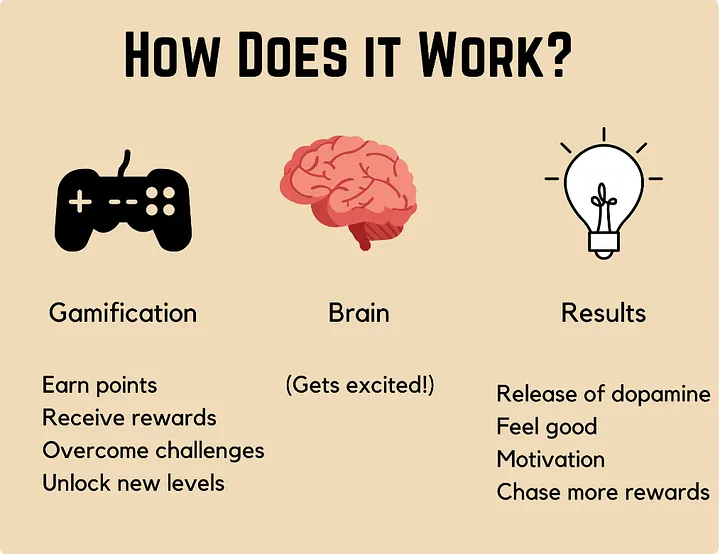
Customer loyalty programs are here to stay. What makes them truly effective? The answer lies in understanding the complex psychological factors that drive customer behavior and decision-making.
Seeing the value
Customers look for value and rewards, which drives their loyalty to your brand. It can come in many forms: discounts, freebies or special offers. Expecting these benefits triggers a psychological response like positive reinforcement and gets customers to repeatedly engage with your business.
Customer motivation
You need to understand what makes your customers tick. People love to feel like they are part of something special. Offering exclusive perks or sneak peeks in customer loyalty programs can create a sense of belonging. Feeling valued and part of the “inner circle” can boost customer loyalty big time.
The power of reciprocity
Giving your customers something extra, like a bonus or a gift, results in their natural desire to reciprocate. It often manifests as loyalty to your brand and a mutually beneficial relationship.
Emotional connections
Customers come back to brands that resonate with them on a personal level. Those who feel emotionally attached to your brand will stick with it even when faced with competitive offers.
Brand loyalty and habits
Once loyalty is formed, it becomes a habit. Customers start to associate their routines with your business. These habits become ingrained, and long-term brand loyalty often supersedes rational decision-making.
But customer psychology isn’t static. As consumer behavior and expectations change, so must your loyalty strategy.
Types of customer loyalty programs
Knowing the different types of store loyalty programs helps you design strategies that work for your target market and customer retention.
Points-based loyalty programs
Customers get points for their purchases and can redeem them for discounts, free products or exclusive offers.
Benefits:
- Simple for customers to understand and join
- Encourages repeat purchases
- Gives valuable insights into customer buying habits
Example: Sephora’s Beauty Insider program gives points for every dollar spent, which customers can redeem for products or experiences.
Tiered loyalty programs
Tiered programs categorize retail customers into levels based on their spending or engagement. Higher tiers offer more valuable rewards, so customers feel they’re progressing and achieving goals.
Benefits:
- Encourages customers to spend more to get to higher tiers
- Helps to identify and reward high-value customers
- Creates a sense of status and exclusivity
Example: The DSW VIP program has three tiers with increasing benefits, bigger discounts and free shipping.
Paid loyalty programs
Paid programs require customers to pay a fee for access to exclusive benefits, often free shipping or early access to products.
Benefits:
- Attracts committed customers
- More valuable rewards due to membership fees
- Can increase the customer lifetime value
Example: Amazon Prime, not exclusively retail, offers free shipping and exclusive offers for a yearly fee, loyalty to Amazon retail.
Setting up your loyalty program
Setting up a loyalty program takes planning and execution. Follow these steps and create a program that your customers will love.
Set your goals
Before you launch a store loyalty program, you must define what you strive to achieve. Retailers primarily want to:
- Increase customer retention rates
- Increase average transaction value
- Get customers to visit more often
- Acquire new customers
- Get valuable customer data
With clear, measurable objectives, you can design your program better and measure its success over time.
Choose the store loyalty program type
Choosing the best type of loyalty program depends on your business model, customer base and defined objectives. Consider:
- What type of rewards do your customers like most?
- Do you have the resources to manage a complex tiered system or a simpler points-based program?
- What type of programs are your competitors offering?
- Can you afford to offer deep discounts or free products or would a paid program be more viable?
Remember you can also combine elements from different program types to create one that best suits your business and customers.
Design your rewards structure
Your rewards are the core of your loyalty program. It should be attractive enough to drive customer participation and be profitable for your business. Consider:
- Reward types: Offer transactional (discounts, free products) and experiential (early access, exclusive events) rewards.
- Earning mechanism: How will customers earn points or progress through tiers? It could be based on spending, number of visits, or specific actions like referrals.
- Redemption options: Give customers multiple ways to redeem rewards for different preferences.
- Reward value: Make sure the perceived value of the reward is greater than the effort to earn it.
- Expiration policy: Will points or rewards expire, and when?
- Special offers: Plan occasional bonus point events or double point days to drive engagement.
Find the balance between generosity and sustainability. Your program should be attractive to customers and good for your bottom line.
Technology integration for store loyalty programs
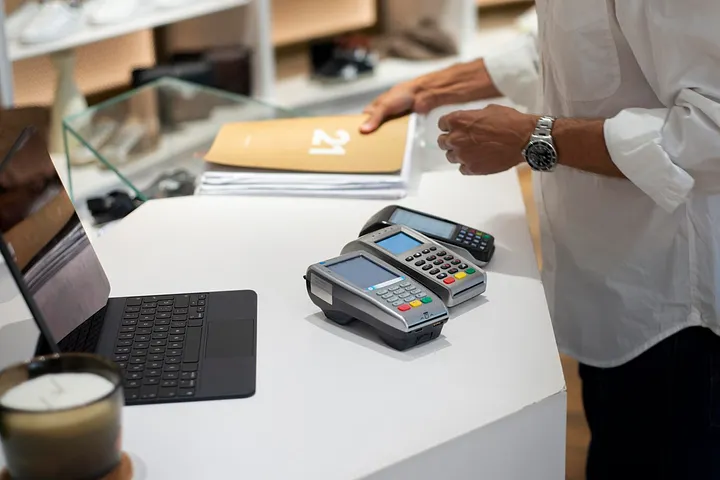
Making your loyalty program technology-enabled is crucial to its success. With the right integrations, you can track and reward customer actions, making your program smoother for you and your customers.
POS system integration
Connect your loyalty program to your POS system. It will allow customers to earn points automatically for every dollar they spend and give you access to sales data so you can see what products are selling.
CRM software
Integrating your loyalty program with CRM software will give you more insight into customer behavior. Using CRM, you can create personalized offers and boost customer engagement. It will also make it easier to manage customer interactions across all channels.
E-commerce platform
If you have an online store, syncing your loyalty program with your e-commerce platform is a must. It will allow online customers to earn rewards just like in-store customers, create a seamless shopping experience, and encourage loyalty across both channels.
Combining these technologies will give you a loyalty program that runs smoothly and meets your business and customer needs. It will build a stronger bond between you and your customers and get them to come back and shop more often.
How to streamline loyalty programs with Loopy Loyalty software
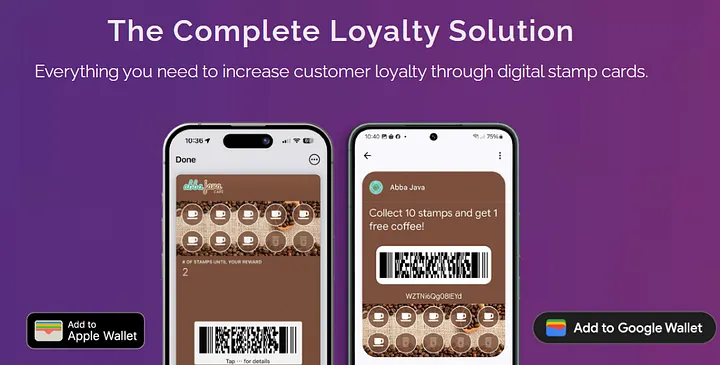
Loopy Loyalty is a loyalty punch card app that helps you reward your customers with customizable mobile punch cards.
It uses mobile wallet technology so customers can store their electronic punch cards in Apple or Google Wallet, making it an easy and eco-friendly solution.
Here’s a quick summary:
- Customization: Brand your loyalty punch card
- Convenience: Issue stamps digitally and save on paper
- Compatibility: Works with Apple and Google Wallet
- Analytics: Get detailed reports to track progress
Forget physical cards and expect more customer engagement and retention with a seamless experience for tracking and redeeming rewards.
How to create custom punch cards
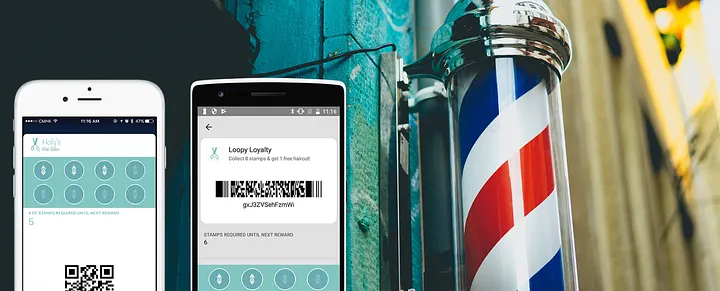
Creating, managing and distributing reward punch cards with the Loopy Loyalty digital punch card system is easy and effective. Follow these steps to create a loyalty card design that matches your brand and business.
Design your card

First, make a visually appealing virtual punch card that captures your brand’s essence. Loopy Loyalty offers customizable loyalty punch card templates that allow you to select colors and images that resonate with your audience.
Add details
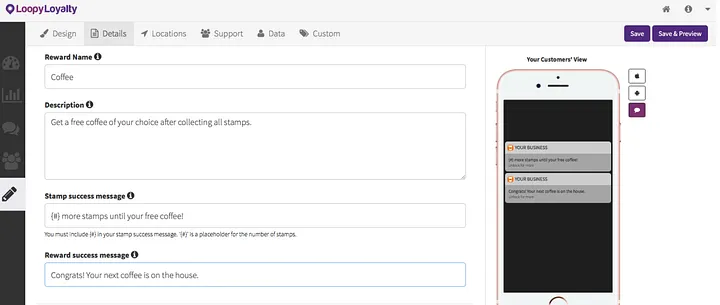
Next, add business contact details and relevant links to your digital punch card.
Select between multi or single punch card rewards and clearly state what customers will receive upon completing the loyalty punch card. Provide a brief overview of the reward, stressing its value.
Prepare a success message that customers will see each time they stamp their card or get a reward, making them feel appreciated and motivated to return.
Add business location
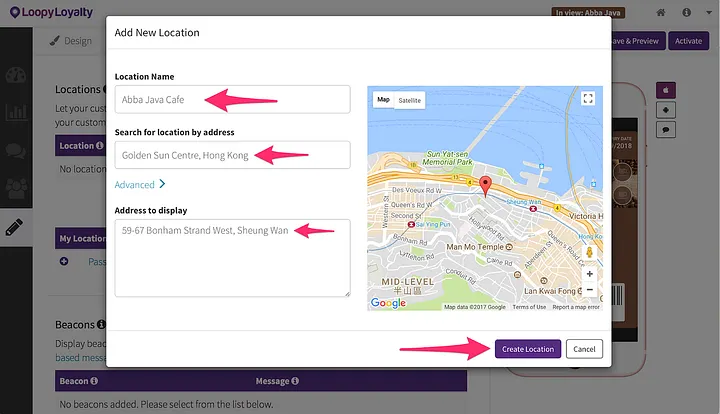
Add your business places to the punch card. This is important for location-based marketing so customers know where to redeem their rewards. A map or specific address will make it even more convenient for customers and drive foot traffic to your business.
Add terms and conditions
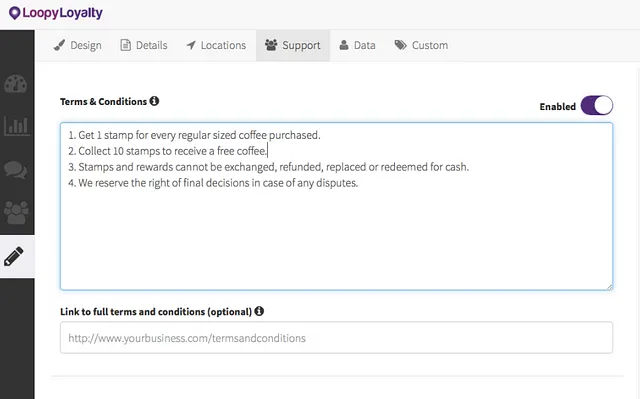
Add any terms and conditions to be transparent and manage customer expectations. This may include expiration dates, eligibility criteria or limitations on rewards. Clear terms will prevent misunderstandings and build trust with your customers.
Get customer data
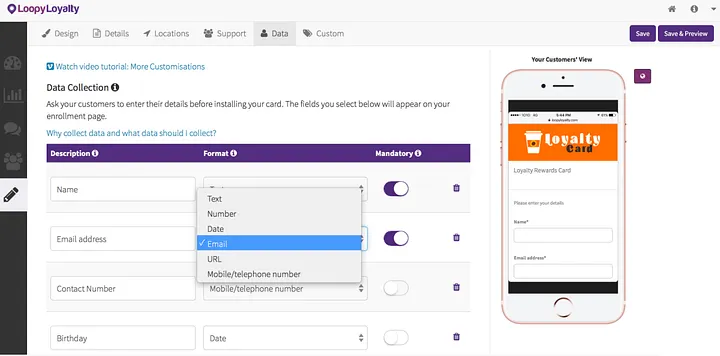
Decide what customer information you want to collect through your store loyalty program. Collecting email addresses, phone numbers, and similar data can help target marketing and increase customer engagement and retention.
Stamp loyalty punch cards
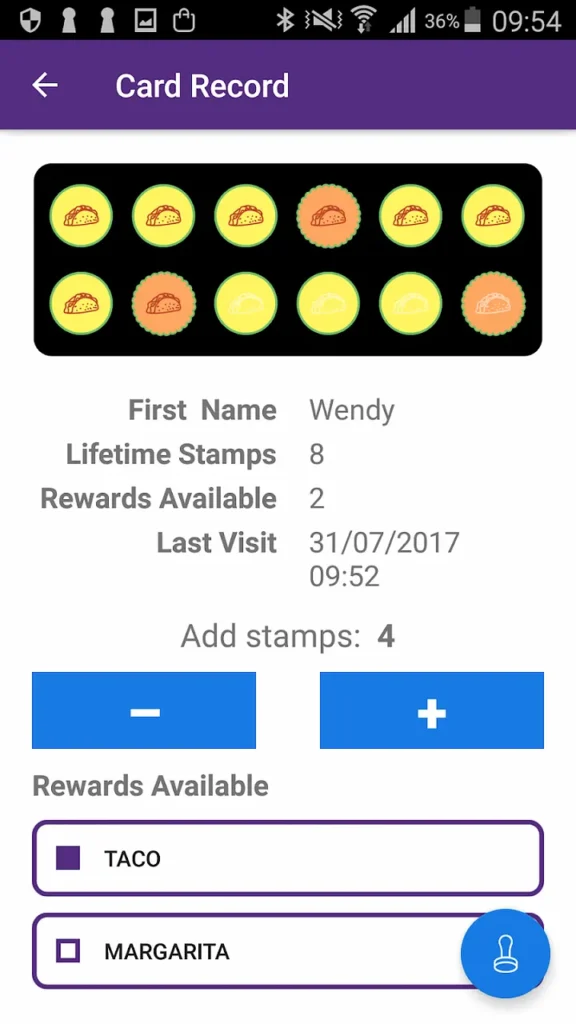
Stamping loyalty punch cards is easy with Loopy Loyalty’s Stamper app for iOS and Android or through the online stamper tool.
Staff can quickly scan a customer loyalty punch card using their smartphone or tablet and update it in real time. This will speed up transactions and give customers instant recognition of their loyalty.
With a few taps, you can track stamps earned and rewards redeemed, making it a smooth experience for your team and customers.
Start a free trial to see how it works.
How to automate store loyalty program with Loopy Loyalty
Loyalty program automation makes life easier. With Loopy Loyalty, you can set up systems that run your program for you. This means less manual work and more time to focus on what matters — your customers.
Set up triggered rewards
You can create triggered rewards that will send rewards to customers after they meet certain conditions. For example, after a customer has made five purchases, they get a discount. This will keep customers engaged without you having to do extra work.
Automate customer communication
Staying in touch with your customers is the top priority. Use Loopy Loyalty to automate emails and notifications. You can send thank you’s, updates or special offers. This will keep the relationship with your customers strong without effort.
Simplify data collection and analysis
Understanding customer behavior is important for any business. Loopy Loyalty has tools to collect and analyze data for you. This gives you insight into customer preferences and purchase patterns so you can tailor your offers to their needs.
Automation will make managing your loyalty program easier, allowing you to focus on growing your business. You will spend less time on tasks and more time making customers happy.
How to promote store loyalty program with Loopy Loyalty
Growing your store loyalty program is key to connecting with your customers. You can create memorable experiences and encourage customers to return.
Email marketing
Email loyalty members about exclusive offers, new products or events specific to their needs. Personalized emails will increase engagement and get them to use their rewards.
Social media marketing
Use social media to create noise around your program. Share success stories, member benefits and unique campaigns to drive sign-ups. Great content will attract new customers and keep current members informed and excited about their rewards.
In-store signage
Great in-store signage will draw attention to your program and get customers to sign up while they shop. Use QR codes and attention-grabbing displays that explain the benefits of joining your program and make it easy for customers to understand how they can earn rewards.
Push notifications and location-based alerts
You can send targeted messages directly to customers’ phones when they are near your store. It will remind them of available rewards or special promotions. This will drive foot traffic and get them to participate in your loyalty program immediately.
Location-based alerts will improve the customer experience by giving them timely information that matches their shopping habits.
Calculate your ROI with Loopy Loyalty
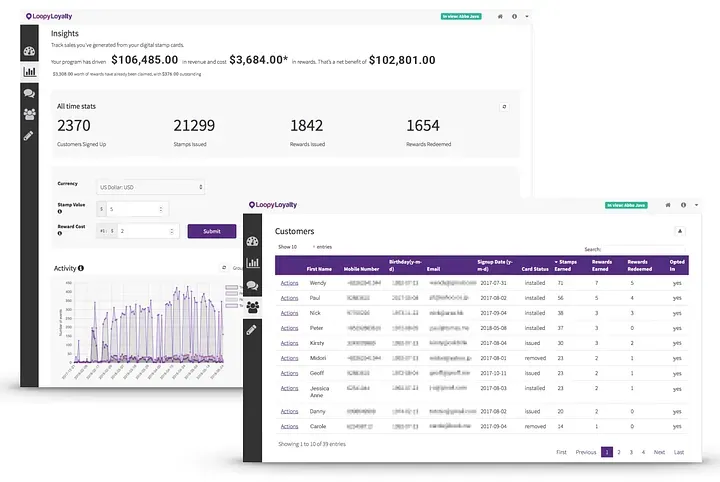
Use Loopy Loyalty’s insights view to see how your loyalty program is performing. Here’s how to calculate your ROI.
Enter values
To calculate your ROI, enter the value of one stamp and the cost of the rewards you offer. Click submit, and Loopy Loyalty will calculate and show you your loyalty program’s gross and net benefits. This makes it easy to see the numbers.
Analyze activity
Use the charts in the insights view to see customer activity for your loyalty program. These will help you spot trends and patterns in customer behavior so you can make informed decisions.
Transaction history
At the bottom of the insights page, you’ll see a list of all transactions for your loyalty program. Click on individual transaction links for more information about each transaction to better understand customer engagement and reward redemption.
Customer list
Use the customer view to see a list of all customers in your loyalty program. This will show everyone who has joined, and you can sort the list by column headers or search for specific terms. It helps with managing customer relationships.
Customer management
Clicking “Actions” next to a customer’s name will show their full record.
This includes:
- Viewing their profile and transaction history
- Sending a message to their lock screen
- Issuing stamps or redeeming rewards
- Deleting customer records if needed
This gives you control over your loyal customers and their interactions with your business. Start a free trial to see how it works.
Seasonal and holiday strategies for loyalty programs
Loyalty programs during the holiday season can increase customer engagement and sales. Offer early access to sales to your loyal customers. You will get their first pick of products before the public rush.
Host exclusive events during holidays. Invite your top customers to a special shopping night with discounts and perks. These can be fun and create buzz around your brand.
Offer free food or treats at in-store events. Small snacks or drinks can make the shopping experience more enjoyable and keep customers in-store longer.
Thinking about off-season engagement will help keep customers interested. When business is slow, offer surprise deals or bonus points on loyalty cards. Keep your business top of mind.
And don’t forget birthday and anniversary rewards. Sending personalized offers on these days will make customers happy. A small discount or free item is a nice touch to get them to shop with you.
Combining these will make your loyalty program better and more enjoyable for your customers all year round.
Customer feedback and store loyalty program improvement
Listening to your customers will help you make better decisions and improve their experience. Acting on their input shows you value their opinion, increasing their satisfaction with your business.
Surveys for loyalty members
Surveys are a direct way to get insights. Ask your loyalty members what they like or dislike about the program. Keep your questions simple and concise. Quick feedback helps you understand customer preferences and make adjustments.
A/B testing reward structures
Try out different reward structures to see what your customers like most. Set up A/B tests to compare two options, such as points or discounts. This will help you see what drives customer engagement.
Acting on customer feedback
When customers give feedback, consider it. Implementing good ideas will improve your program and show your audience that you value their opinion. Small changes like adding a birthday bonus can make a big difference to customer satisfaction.
Best practices for store loyalty programs
To create a successful loyalty program, you must implement best practices that speak to modern customers.
Simplicity and ease of use
A good loyalty program should be simple and easy to use. Don’t complicate it with strict rules or complex processes that might discourage participation. Focus on clear instructions, a simple sign up process and an easy-to-understand reward structure.
By keeping it simple, you’ll get more customers to join and actively participate in your program.
Personalization
Tailoring rewards to individual customer preferences makes your loyalty program more attractive. Use purchase history and customer behavior data to offer relevant personalized rewards such as exclusive access to their favorite products.
It will build stronger customer loyalty and increase the perceived value of your program.
Regular communication
Communicate with your members about their reward status, new offers or promotions and any program changes or improvements. Use different channels like email, SMS or in-app notifications to reach your customers.
Consistent communication will keep customers engaged, remind them of your program’s value, and encourage repeat business.
Brand consistency
Your loyalty program should be an extension of your brand. Ensure the program’s visual elements and messaging match your brand image. Use your brand colors, logo and tone of voice throughout the program’s materials and communications.
Consistency will build brand recognition and make customers feel comfortable and confident to participate in your loyalty program.
Mobile integration
Mobile integration is key to increased accessibility and engagement. Consider integrating mobile wallets with Loopy Loyalty for easy reward tracking, digital loyalty cards or mobile exclusive deals.
Mobile integration will make it easy for customers to interact with your program anytime, anywhere, driving higher participation rates and deeper connections with your brand.
Having a great loyalty program will make your store their favorite place to shop over and over again. Get customers to come back by making the experience rewarding and fun.
Final words about store loyalty program
Running a store loyalty program is a good idea for your business. It gets customers to come back. By rewarding them, you build customer relationships.
Imagine having a loyal customer base that shops more often and tells others about your store. Loyalty programs can do that by offering rewards customers love.
Start by choosing the right type of program. You could choose point-based or exclusive membership plans. Remember to make your customers feel valued.
Track the results. Use data to see how your program is performing. Based on what you learn, optimize your strategy.
Make rewards exciting. Offer discounts, exclusive deals or special events that your customers can’t resist. Make sure these rewards match what your customers want.
Ready to get started? Sign up now for Loopy Loyalty.
Your small business will benefit from the right loyalty program approach.
Store loyalty program FAQs
Let’s answer the most common questions about store loyalty programs.
What is a store loyalty program?
A store loyalty program is a rewards system that encourages repeat customers. You earn points for every purchase, which can be redeemed for discounts or gifts. These programs increase customer engagement and sales.
What are the best loyalty programs for retailers?
The best loyalty programs have points-based rewards, where customers get something in return for their loyalty. Programs managed by Loopy Loyalty are effective in building customer loyalty.
What is an example of a loyalty program?
A common example is a points-based program in which customers earn points on purchases. These points can be redeemed for discounts or other perks. This is the most popular type worldwide, and success depends on clear goals and understanding the target audience.
What is the best rewards program?
Worldwide, the best rewards programs are points-based. These programs let customers accumulate points and get something valuable. Many businesses succeed by using these to understand their customers and increase satisfaction.